

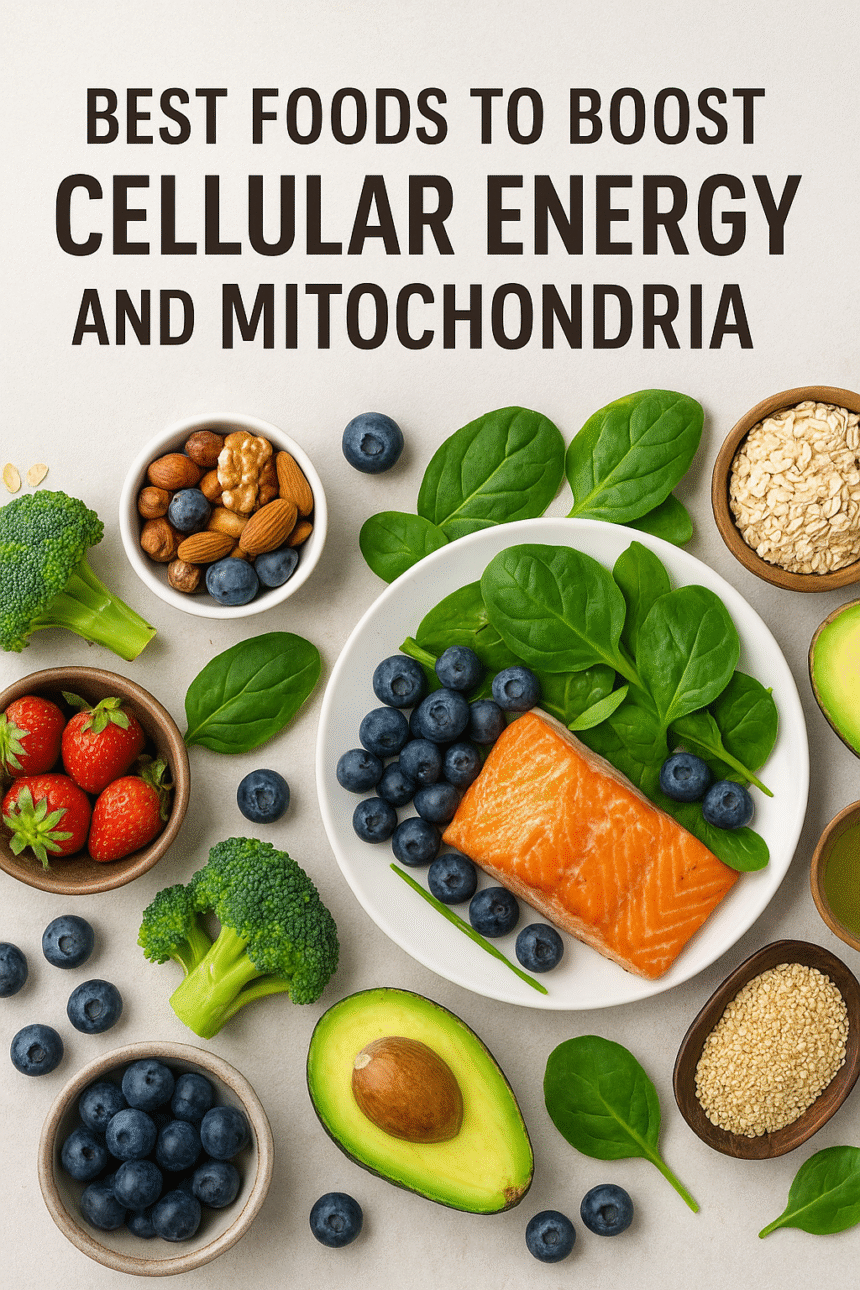
Have you ever wondered why some days you feel full of energy while other days even simple tasks seem exhausting? The answer may lie in your mitochondria. These tiny “powerhouses” inside your cells are responsible for turning food into usable energy. If your mitochondria are weak, your energy levels drop.
The good news? Eating the right foods for mitochondrial health can naturally improve how your body produces energy. In this article, we’ll explore the best foods that support strong mitochondria and help you stay energized throughout the day.
1. Leafy Green Vegetables
Leafy greens like spinach, kale, and Swiss chard are packed with nutrients such as magnesium and B vitamins. These play a direct role in mitochondrial function. Magnesium, for example, helps enzymes in the mitochondria work more efficiently.
- Rich in antioxidants
- Provide folate and vitamin C
- Support overall cell repair
💡 Tip: Add a handful of spinach to your morning smoothie for a simple energy boost.
2. Fatty Fish (Salmon, Mackerel, Sardines)
Omega-3 fatty acids in fish are essential for maintaining the integrity of your cell membranes. Stronger cell membranes mean better mitochondrial health and improved energy production.
- High in DHA and EPA
- Reduce inflammation in the body
- Support brain and heart health
Experts believe that eating fatty fish two to three times a week can significantly improve your energy and overall wellness.
3. Berries (Blueberries, Strawberries, Acai)
Berries are loaded with antioxidants like polyphenols that protect mitochondria from oxidative stress. Too much stress damages mitochondria, making them less efficient.
- Reduce cellular aging
- Improve brain health
- Provide quick natural energy
Have you ever noticed how refreshing a bowl of mixed berries feels on a hot day? That’s your mitochondria thanking you.
4. Nuts and Seeds
Almonds, walnuts, chia seeds, and flaxseeds provide essential fatty acids and Coenzyme Q10 (CoQ10). CoQ10 is critical for the electron transport chain—the main process mitochondria use to generate energy.
- Boost endurance
- Support heart and muscle health
- Provide long-lasting energy
5. Whole Grains
Brown rice, oats, and quinoa are packed with fiber and complex carbs. Unlike refined grains, these release energy slowly, keeping your mitochondria fueled for hours.
- Rich in B vitamins
- Help regulate blood sugar
- Improve stamina and focus
6. Dark Chocolate (70% and above)
Yes, chocolate can be good for your mitochondria—when chosen wisely. Dark chocolate contains flavonoids and magnesium that help reduce mitochondrial stress.
- Boost mood and energy
- Provide antioxidants
- Support circulation
7. Eggs
Eggs are one of the most complete foods for mitochondrial health. They provide protein, B vitamins, and choline—nutrients necessary for proper cell signaling.
- Improve focus
- Support muscle strength
- Balance hormones
8. Cruciferous Vegetables (Broccoli, Cauliflower, Brussels Sprouts)
These vegetables are rich in sulforaphane, a compound that activates protective pathways inside cells. This helps mitochondria stay resilient against toxins.
- Detoxify the body
- Improve digestion
- Reduce fatigue
9. Green Tea
Green tea is loaded with catechins—powerful antioxidants that protect mitochondria and support fat metabolism. That’s why many weight management diets recommend green tea.
- Boost fat burning
- Improve focus
- Protect heart health
10. Supplements (Optional Boost)
Sometimes diet alone may not be enough. Nutraceutical supplements designed for mitochondrial health, like Mitolyn, may provide extra support. They often include CoQ10, L-carnitine, and essential antioxidants.
👉 Want to know more? Read my detailed Mitolyn Review where I explain how this supplement supports mitochondrial energy naturally.
🔗 Internal Links (Suggestions for Medsjoy.com)
FAQs
Q1: What foods are best for mitochondrial health?
Foods like leafy greens, fatty fish, nuts, whole grains, and berries are best for improving mitochondrial health.
Q2: Can supplements improve mitochondrial function?
Yes, supplements like CoQ10, L-carnitine, and products such as Mitolyn can help support mitochondrial function when paired with a healthy diet.
Q3: How do mitochondria affect energy levels?
Mitochondria convert nutrients into ATP, the body’s energy currency. Healthier mitochondria = more energy.
Q4: Is green tea good for mitochondria?
Yes, green tea provides antioxidants that protect mitochondria from oxidative stress and improve fat metabolism.
Q5: How quickly can diet changes improve energy?
Most people notice improved energy within a few weeks of eating a mitochondrial-friendly diet.
Your mitochondria play a crucial role in how energized or tired you feel every day. By choosing the right foods—like leafy greens, berries, fish, and whole grains—you can improve your cellular health and experience lasting vitality.
Remember, small changes add up. Try including one or two of these foods in your daily meals, and you’ll start noticing the difference.
👉 Want extra support? Don’t miss my full Mitolyn Review to learn how this supplement helps boost mitochondrial health naturally.