

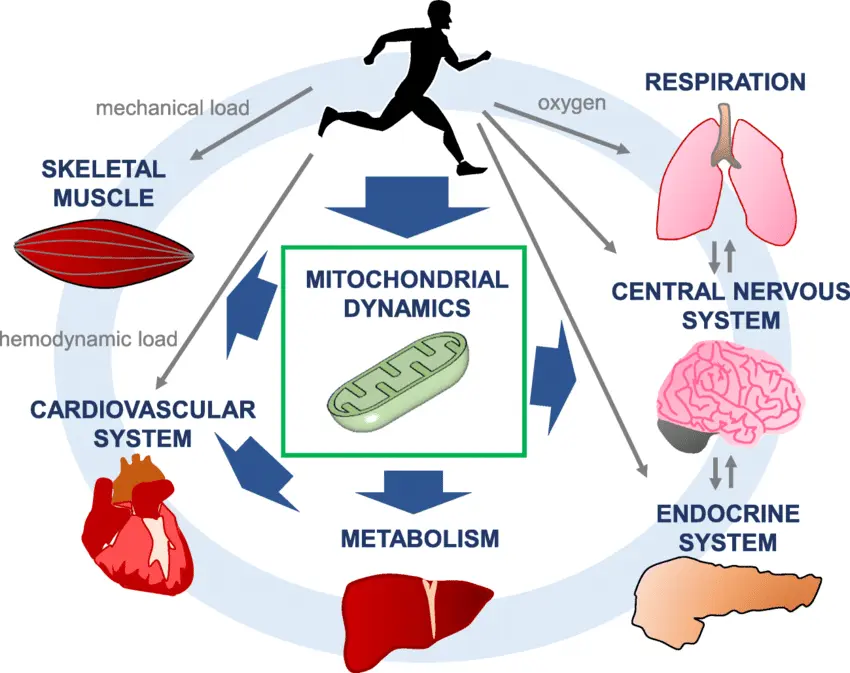
Have you ever wondered why some people feel energized after exercise while others feel drained? The secret often lies in exercise for mitochondrial health. Mitochondria, the tiny “power plants” inside our cells, produce the energy we need to move, think, and recover. But here’s the catch—without proper care, they can become sluggish.
This article explains how exercise directly impacts mitochondria, improves cellular energy, and even slows aging. By the end, you’ll know how to use movement not only to stay fit but also to fuel your body at the deepest level.
🔋 Why Mitochondria Matter for Energy
Mitochondria are often called the powerhouse of the cell because they convert food and oxygen into ATP (adenosine triphosphate), your body’s energy currency.
When mitochondria function well:
- You feel energetic throughout the day.
- Muscles recover faster after activity.
- Brain fog reduces, and focus improves.
When they function poorly:
- Fatigue becomes common.
- Exercise feels harder.
- Aging signs appear earlier.
🏃♂️ How Exercise Boosts Mitochondrial Health
- Stimulates New Mitochondria (Biogenesis):
Aerobic workouts like walking, running, or cycling increase the number of mitochondria in muscle cells. More mitochondria = more energy. - Improves Mitochondrial Efficiency:
Strength training and interval workouts force mitochondria to adapt, making them better at producing ATP. - Reduces Oxidative Stress:
Regular movement lowers free radicals that damage mitochondria, protecting long-term energy production. - Supports Healthy Aging:
Studies show active people have mitochondria that function “younger” compared to sedentary individuals.
🧘 Best Types of Exercise for Mitochondrial Health
- Aerobic Exercise (Cardio): Walking, swimming, cycling – promotes new mitochondria.
- High-Intensity Interval Training (HIIT): Alternating between intense bursts and rest improves mitochondrial function.
- Strength Training: Weightlifting builds muscle, which in turn demands stronger mitochondria.
- Flexibility & Recovery Workouts: Yoga and stretching improve blood flow, indirectly benefiting energy cells.
💡 Tip: Even 20–30 minutes of daily exercise can show mitochondrial benefits.
🍎 Nutrition + Exercise Combo
Exercise alone helps, but pairing it with nutrient-rich foods supercharges results.
Some top mitochondrial boosters include:
- CoQ10 (found in fish and organ meats)
- B vitamins (whole grains, eggs, leafy greens)
- Magnesium (nuts, seeds, beans)
- Omega-3s (fatty fish, flaxseed)
👉 For a detailed breakdown, check out our post on Best Foods for Mitochondrial Health.
🔗 Related Reading on Medsjoy.com
Also, if you’re looking for advanced support, don’t miss my detailed Mitolyn Review—a supplement designed to improve cellular energy.
FAQs
Q1: How does exercise improve mitochondrial function?
Exercise stimulates mitochondrial biogenesis (creation of new mitochondria) and makes existing ones more efficient.
Q2: What type of exercise is best for mitochondria?
A mix of cardio, HIIT, and strength training provides the best results for mitochondrial health.
Q3: How long does it take to see benefits?
Some improvements happen in weeks, but consistent exercise for 2–3 months leads to noticeable energy gains.
Q4: Can supplements replace exercise for mitochondria?
No. Supplements like Mitolyn can support mitochondria, but physical activity remains essential.
Q5: Does age affect mitochondrial health?
Yes. Mitochondria decline with age, but regular exercise helps slow this natural process.
Mitochondria are at the heart of your energy and vitality. Regular exercise for mitochondrial health doesn’t just keep you fit—it literally powers your body at the cellular level.
By combining consistent workouts with nutrient-rich foods and smart supplementation, you can feel more energetic, recover faster, and even slow the signs of aging.
👉 Start today: Move a little more, eat mindfully, and if needed, explore trusted supplements. For a deeper dive, don’t forget to check out my detailed Mitolyn Review.