

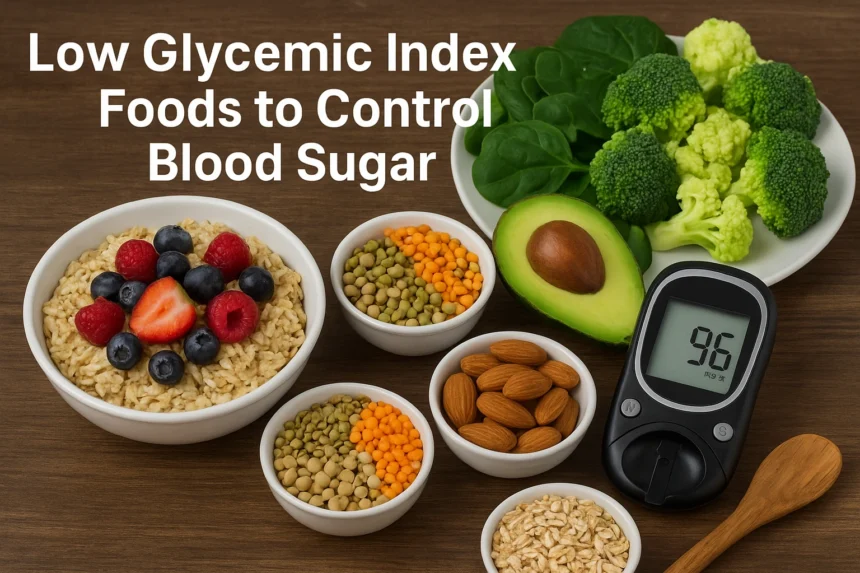
Low glycemic index foods are one of the most powerful dietary strategies for controlling blood sugar naturally. Have you ever felt that sudden sugar crash after eating a big plate of white rice or bread? That’s because high-GI foods quickly spike your glucose levels. Over time, these spikes can lead to fatigue, cravings, and in many cases, diabetes complications.
The good news is — choosing low glycemic index foods keeps your energy steady, helps you manage weight, and protects your long-term health. In this article, we’ll explore what the glycemic index is, why it matters, and the best foods you can add to your daily routine for stable blood sugar.
What is the Glycemic Index (GI)?
The glycemic index is a scale (0–100) that measures how quickly a food raises your blood sugar.
- High GI (70–100): Spikes blood sugar fast (e.g., white bread, soda).
- Medium GI (56–69): Moderate rise (e.g., sweet potato, basmati rice).
- Low GI (0–55): Slow release, stable energy (e.g., beans, oats, apple).
Experts believe that low-GI foods are essential not just for people with diabetes but also for anyone aiming for weight management and better overall health.
👉 Related Read: 10 Natural Ways to Boost Immunity
Benefits of Low Glycemic Index Foods
Low GI foods aren’t just about blood sugar. They:
- Reduce risk of type 2 diabetes.
- Improve satiety (you feel fuller for longer).
- Help manage weight without extreme diets.
- Support heart health by lowering cholesterol.
- Boost daily energy and mental clarity.
Imagine starting your day with oats topped with berries instead of sugary cereal — you’ll feel steady, not sluggish.
Top Low Glycemic Index Foods to Add to Your Diet
1. Legumes (Lentils, Chickpeas, Kidney Beans)
Packed with protein and fiber, legumes have a GI score of 30–40. They keep you full and stabilize blood sugar.
How to include: Add them to soups, salads, or even make hummus.
2. Whole Grains (Oats, Barley, Quinoa)
Refined carbs spike sugar, but whole grains digest slowly. Steel-cut oats and barley have a GI under 50.
Example: Overnight oats with chia seeds and blueberries.
3. Fruits (Berries, Apples, Pears, Grapefruit)
Not all fruits are equal. Watermelon is high GI, but berries, apples, and pears are excellent low-GI choices.
Tip: Eat whole fruits, not juices, for fiber benefits.
4. Non-Starchy Vegetables (Broccoli, Leafy Greens, Cauliflower)
These are almost always low GI, nutrient-rich, and excellent for weight management.
👉 Bonus Resource: Grab our Free Ebook: “7-Day Low GI Meal Plan” Download Here
5. Nuts & Seeds (Almonds, Chia, Flaxseeds)
Nuts have a GI near zero and help lower the overall glycemic response of meals.
Snack idea: A handful of almonds or chia pudding in the morning.
6. Dairy & Alternatives (Greek Yogurt, Unsweetened Almond Milk)
Low-fat Greek yogurt has a GI around 35, making it a great breakfast or snack option.
Sample Daily Routine with Low GI Foods
- Breakfast: Oatmeal topped with berries + chia seeds.
- Mid-Morning Snack: Greek yogurt with almonds.
- Lunch: Lentil salad with leafy greens and olive oil.
- Evening Snack: Apple slices with peanut butter.
- Dinner: Grilled salmon with quinoa and broccoli.
This simple routine supports both blood sugar control and weight management without strict dieting.
👉 Related Read: Best Foods for Mitochondrial Health
Affiliate Product Mention
Many people also add natural supplements to support healthy glucose levels. If you’re curious, read my detailed Mitolyn Review to see how it works alongside a low-GI diet.
FAQs About Low Glycemic Index Foods
Q1. What are the best low glycemic index foods for breakfast?
A1. Oats, Greek yogurt, berries, and eggs are excellent breakfast options to start the day with stable blood sugar.
Q2. Can low-GI foods help with weight loss?
A2. Yes. Since they keep you full for longer and reduce cravings, they are very effective for weight management.
Q3. Are bananas high or low GI?
A3. Bananas are moderate GI (around 51). Slightly green bananas are lower GI compared to overripe ones.
Q4. Do I need to avoid all high-GI foods?
A4. Not necessarily. You can balance a high-GI food (like white rice) with low-GI foods (like lentils or vegetables) in the same meal.
Q5. Is a low-GI diet good for non-diabetics?
A5. Absolutely. It helps with energy, weight management, and long-term heart health even if you don’t have diabetes.
Low glycemic index foods are a powerful tool for controlling blood sugar, managing weight, and improving overall wellness. By simply swapping high-GI foods for healthier options, you can experience steady energy, better mood, and long-term health benefits.
✨ Start small today — replace your white bread with oats or your soda with water and lemon. For more strategies, don’t forget to download our Free 7-Day Low GI Meal Plan and check out detailed supplement reviews for extra support.